
One product for hosting providers tired of stitching billing, DCIM, and provisioning together.
FluxBilling is the integrated stack: invoices, racks, IPAM, and provisioning in a single schema, with a visual plugin builder and tenant isolation at the Kubernetes layer.
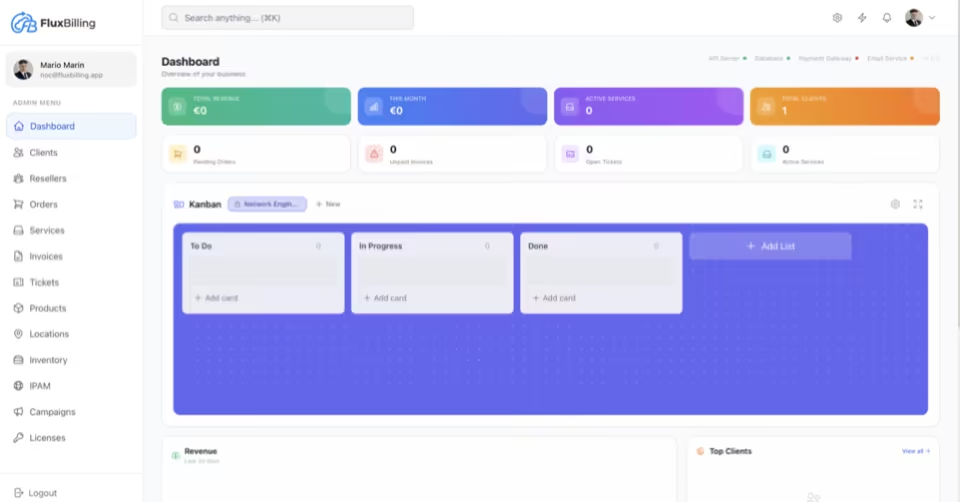
Operators stopped accepting reload-and-pray.
The existing hosting-billing stack treats billing, DCIM, and provisioning as three vendors and a sync job. Every product looks like it was last refactored when jQuery was new. Operators stitched the gaps together with brittle integrations and prayed the invoices matched the rack.
FluxBilling is the integrated alternative: one schema for the data center, one runtime for the work queue, one product surface for support. The pieces talk to each other because they share a database, not because somebody wrote a cron.
We are deliberate about what we are not. The third-party plugin marketplace is small. cPanel/Plesk/DirectAdmin coverage is in progress. If those are non-negotiable today, the comparison page is the right place to start — it lists where the alternatives still win.
What we optimize for — in operator language.
Every product decision rolls back to one of these four. When two collide, the order on this page is the tiebreaker.
Billing, DCIM, and provisioning in a single schema. No sync jobs between vendors, no reconciliation cron at 3 a.m.
Every gateway, hypervisor, registrar, and monitor is a plugin. Swap providers without forking core.
Optimistic UI, queued workers, no full-page reloads. State persists across actions; the panel does not unmount on click.
Public roadmap, live changelog, honest comparisons. We publish the misses alongside the ships.
What we are not, and what we are instead.
The shortest way to disqualify yourself before opening a ticket.
- notPage reloads on every click.
- isA live app: optimistic state, durable queues, no full-page reloads on action.
- notPer-gateway licensing fees.
- isAll major gateways included. Cost scales with your customer count, not your stack diagram.
- notA DCIM bolt-on synced to billing nightly.
- isRacks, U-positions, IPAM, and power as first-class objects in the same database as your invoices.
- notA demo gate or qualification call before you see the product.
- isPricing and capabilities are public. Provision a tenant from the pricing page; refund inside 14 days if it is not the fit.
- notA closed plugin model.
- isVisual plugin builder, public JSON manifests, .xzplugin export. Core forks are not a supported integration path.
The stack, in numbers worth verifying.
Public surface area of the platform as of the current release. Each line is something you can hit with a curl, run a kubectl against, or wire in the visual plugin builder.
- Backend route domainsAPI surface
- 76
- Plugin typesinfra · payment · automation · notify
- 4
- Tenant orchestrationone namespace per tenant
- K3s
- Per-tenant databaseisolated, backed up nightly
- PG 16
Three places we put the receipts on the table.
You should not have to take our word for any of this. Each link below opens public artifacts.
Public roadmap
What's shipping next quarter, what's deferred, what we said no to.
See the roadmapLive changelog
Every release, including the unglamorous fixes and the rollbacks.
Read the changelogHonest comparisons
Side-by-side tables versus WHMCS, Blesta, EasyDCIM — including where they win.
See alternativesTry it on your own data. Refund inside 14 days if it’s not the fit.
Pick a tier and provision a tenant in under two minutes — isolated K3s namespace, your own database, the full product. If FluxBilling isn’t the right fit inside 14 days, open a ticket and we’ll refund the subscription. No sales call, no qualification gate. Want to look around first? The live demo opens the admin and client panels with sample data, no signup.
- 01.< 1 minPick a tierLite from €4.95/mo. Upgrade later, no migration.
- 02.< 2 minProvision the tenantIsolated K3s namespace + your own PostgreSQL database. Full product, your data.
- 03.d0 — d14Refund inside 14 daysNot the fit? Open a ticket within 14 days and we refund the subscription. No questions, no qualification gate.